Part of our Student Movements & Public Accountability coverage — see related explainers below.
The two exam crises that gave the movement its fuel
CJP didn’t organize around the Chief Justice’s remark for long — that was the spark, not the fuel. What actually pulled it onto the street was a pair of overlapping exam failures that were already generating anger of their own, independent of any political movement: a fresh paper leak affecting NEET-UG (India’s medical entrance exam) and irregularities in the CBSE’s on-screen marking and revaluation process that left large numbers of school students without finalized results for weeks during a college-admission cycle where every week of delay has real consequences.
The two controversies get folded together in most coverage, but they’re separate failures, run by separate bodies, roughly two years apart:
| Issue | What happened |
|---|---|
| NEET-UG 2024 leak | Supreme Court confirmed a leak had occurred, but on 23 July 2024 ruled against a full cancellation or re-test, finding no evidence of a “systemic breach” |
| NEET-UG 2024 grace-marks dispute | 1,563 candidates who’d been given grace marks had those revoked; offered a retest on 23 June 2024 or counselling on their original scores |
| NEET-UG 2026 leak | A fresh leak in the 2026 exam cycle became the immediate trigger for the CJP-led protests |
| CBSE On-Screen Marking irregularities | Evaluation and revaluation errors left thousands of CBSE students without finalized results for weeks |
All four fall under bodies the Union Education Ministry oversees — the NTA for the NEET issues, the CBSE for the marking issue.
It’s worth being precise about the timeline here: the 2024 leak and the 2026 leak are two separate incidents roughly two years apart, both under the NTA’s watch, both eventually followed by government reassurances that systems had been fixed, and both now cited together by protesters as evidence of an uncorrected pattern rather than a one-off failure. That “it happened again” framing is doing a lot of the emotional work behind the protest’s staying power — a single leak is a scandal; a second one two years later, after a law was specifically passed to prevent it, is a credibility problem for the institution, not just the incident.
Timeline: day one to the crackdown
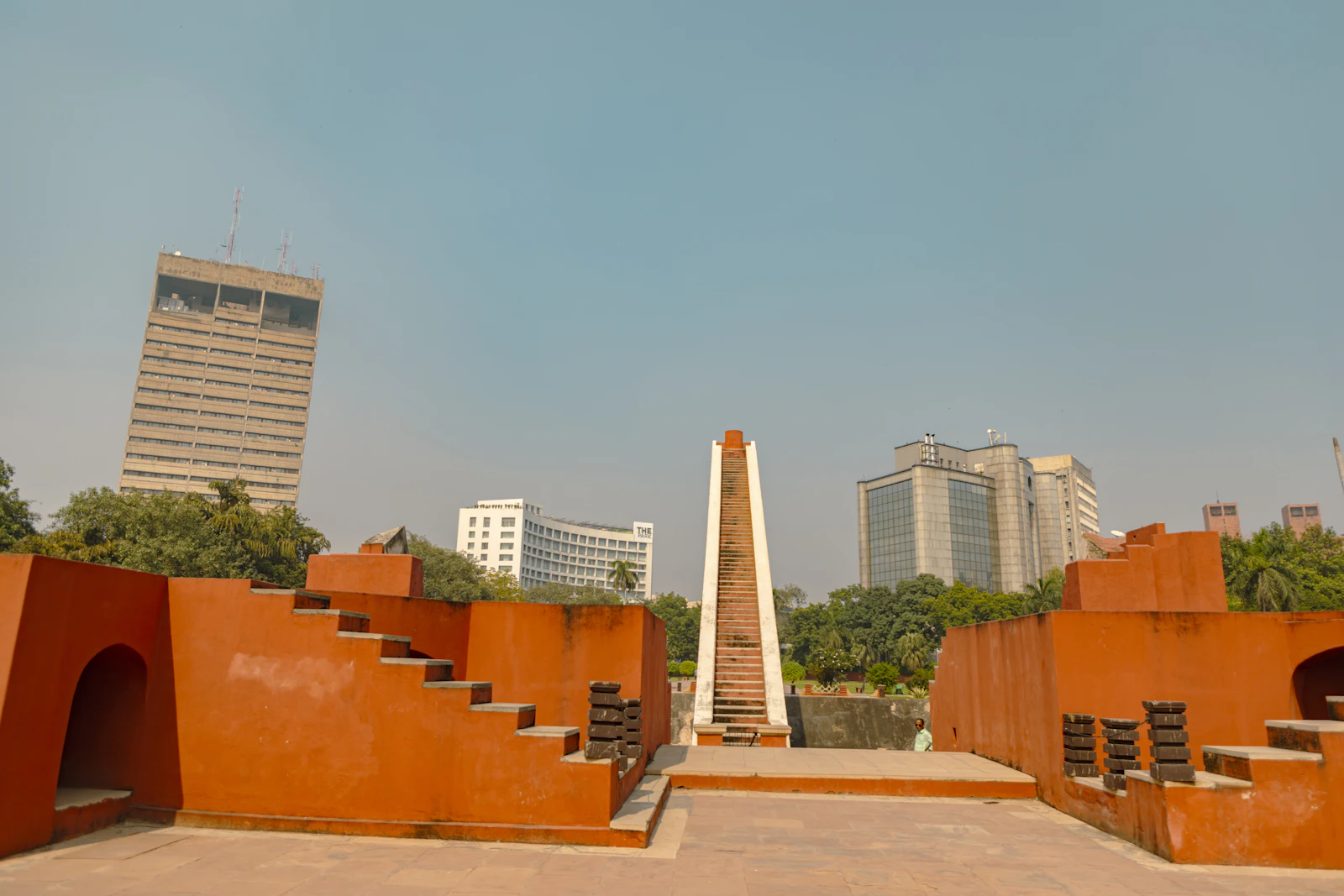
- 6 June 2026 — CJP holds its first street protest at Jantar Mantar, joined by established student organisations: the Students Federation of India (SFI), the All India Students Association (AISA), and the All India Students Federation (AISF). The core, single demand: the resignation of Union Education Minister Dharmendra Pradhan over the NEET and CBSE failures.
- Mid-June 2026 — The protest’s own X (formerly Twitter) account is banned by the Indian government, which cited “threats to national security.” CJP disputes the characterization.
- 28 June 2026 — Ladakh-based education reformer and climate activist Sonam Wangchuk joins the protest site and begins an indefinite hunger strike, specifically demanding Pradhan’s resignation. Wangchuk was already a nationally recognized figure for his prior activism on Ladakh’s statehood and Sixth Schedule status — a separate, earlier campaign, not one originating with CJP. According to a CJP press release, Wangchuk lost more than 18 pounds over 18 days on strike.
- Late June–July 2026 — Crowds at Jantar Mantar grow substantially. Opposition politicians and film personalities begin visiting the site, giving the protest wider media coverage and, by the government’s framing, a more overtly political character than its “single-issue” claim allowed for.
- 20 July 2026 — Protesters attempt a “Sansad Chalo” (march to Parliament) as Parliament’s monsoon session opens.
- 21 July 2026 — Delhi Police use tear gas and batons to disperse thousands of protesters attempting the march. International outlets (NPR, CNN, Common Dreams) cover the crackdown; one headline calls it a “Black Day for Democracy.” CJP states it will continue protesting.
- Late July 2026 — Prime Minister Narendra Modi announces the government will set up fast-track courts specifically to speed up trials in examination paper-leak cases, stating that those who “attempt to destroy the future of India’s youth will not be spared,” per reporting from thetatvaindia. This sits on top of the pre-existing Public Examinations (Prevention of Unfair Means) Act, 2024 (in force since 21 June 2024), which already provides for three-to-five-year sentences for individual offences and five-to-ten-year sentences plus a minimum ₹1 crore fine for organised examination fraud.
Sonam Wangchuk’s own history: Pakistan, a twisted clip, and who actually called him “anti-national”
Wangchuk’s hunger strike is what gave the CJP protest national reach, but he arrived at Jantar Mantar already carrying a controversy of his own — one that predates CJP entirely and is worth untangling on its own terms, because the popular version of the story (“he praised Pakistan and both parties called him anti-national”) doesn’t quite match the documented record.
| When | What actually happened |
|---|---|
| 2013–2019 | Wangchuk built the “New Ladakh Movement” and publicly thanked the Modi government for carving Ladakh out as a separate Union Territory in 2019 — a request his own campaign had pushed for. He was, if anything, seen as closer to the BJP during this period. |
| May 2024 | A 15-second clip circulated online appearing to show Wangchuk demanding a “plebiscite” for Kashmir. Fact-checks by The Quint and BOOM Live found the clip was cut from a longer answer about Ladakh re-merging with Jammu & Kashmir, in which Wangchuk was saying Ladakh did not want that — the opposite of the plebiscite claim. Wangchuk called it “twisted.” |
| 6–7 February 2025 | Wangchuk spoke at “Breathe Pakistan,” a climate conference in Islamabad hosted by Dawn Media. In his remarks, he praised the Dawn media house for treating environmental coverage seriously, and separately praised PM Modi’s “Mission LiFE” initiative on sustainable living. He did not praise the Pakistani state or government. |
| February–September 2025 | Right-leaning commentary and some BJP-aligned voices used the Pakistan trip to allege Wangchuk had undisclosed “Pakistan links,” which fed into a broader “anti-national” characterization. Ladakh police said they were examining the trip as part of a wider inquiry. |
| September 2025 | Protests over Ladakh’s demand for statehood and Sixth Schedule tribal protections turned violent in Leh; four people died. Wangchuk was arrested under the National Security Act. His wife, Gitanjali Angmo, publicly called the anti-national framing a “witch hunt.” |
| September–October 2025 | Congress initially kept its distance, with some in the party arguing Wangchuk had “long been associated with the BJP” rather than defending him outright — reporting attributes the party’s eventual show of solidarity to Sonia Gandhi personally pushing Rahul Gandhi to back him, invoking Indira Gandhi’s 1984 support for Wangchuk’s father during an earlier fast. BJP leaders, meanwhile, alleged “financial impropriety” and “matters touching upon national security” and questioned why an opposition-aligned protest was using him as its face. |
Two corrections to the version of this story that circulates informally are worth stating plainly. First, what Wangchuk actually said in Islamabad was praise for a Pakistani newspaper’s climate journalism and for Modi’s own domestic climate initiative in the same breath — not an endorsement of Pakistan as a state, which is a materially different claim than “praised Pakistan.” Second, the “anti-national” label wasn’t a Congress creation that BJP later adopted — the documented sequence runs the other way: BJP-aligned commentary pushed the label hardest around the Pakistan trip and the September 2025 NSA arrest, while Congress’s early posture was closer to quiet distancing (on the grounds that Wangchuk was seen as BJP-friendly) than to leveling the “anti-national” charge itself. By the time he joined the CJP protest in June 2026, Wangchuk arrived as a figure both major parties had, at different points and for different reasons, kept at arm’s length — which is part of why his hunger strike read as more credible to protesters than a partisan endorsement would have.
The “Hum Dekhenge” recitation, and a poem with its own older controversy
One specific moment from the Jantar Mantar stage is worth addressing directly, because it’s exactly the kind of clip that gets detached from context and used to relabel a protest. At one of the CJP demonstrations, retired Delhi University professor and longtime teachers’-union activist Nandita Narain recited lines from “Hum Dekhenge,” including “Bas naam rahega Allah ka” — “only the name of God will remain.”
A few things are worth separating out here.
Who Nandita Narain is, and why this isn’t new for her. Narain taught at St. Stephen’s College for four decades and served as president of the Delhi University Teachers’ Association (DUTA). She has a long, well-documented history of civil-liberties activism predating CJP by years, and reciting “Hum Dekhenge” at protests is something she and other DU-affiliated activists have done at multiple demonstrations going back to the 2019–2020 anti-CAA protest movement — it isn’t a poem written for, or unique to, this particular protest.
What the poem actually is. “Hum Dekhenge” (“We Shall See”) was written in 1979 by the Pakistani poet Faiz Ahmed Faiz as a piece of resistance verse aimed at General Zia-ul-Haq’s military dictatorship in Pakistan — not at India, and not at Hindus. It later became a broadly used anthem against authoritarianism across South Asia, and entered Indian protest culture prominently during the 2019–2020 anti-CAA demonstrations, where students and faculty at IIT Kanpur among other campuses recited it.
The line itself already went through this fight once. The same “Bas naam rahega Allah ka” line triggered a formal complaint at IIT Kanpur in early 2020, with a faculty committee asked to determine whether the poem constituted anti-Hindu hate speech. The committee’s inquiry closed without upholding that charge. Public figures weighed in on the same question at the time — lyricist and screenwriter Javed Akhtar called the “anti-Hindu” reading of the poem “absurd,” pointing out that the line borrows Sufi-inflected imagery of divine justice common across Urdu poetry, aimed squarely at a dictator, not at any religious community.
Where the “student protest” framing started to strain
This is the part worth being careful with, because it’s also the part most prone to being overstated in either direction.
What’s documented: CJP’s own spokesperson, Saurav Das, was directly asked in press interactions about the movement’s connection to Umar Khalid — the activist held since 2020 in connection with the Delhi riots case, whose bail was denied by the Supreme Court and who has become a fixture of BJP–Congress political sparring for years, independent of CJP. Das’s answer, per reporting, was that the movement is deliberately built around a single issue — education — and that bringing in adjacent political causes risks fracturing the coalition holding the protest together. That’s a statement of strategy, not an admission of an organizational link, and treating it as the latter would be misreporting it.
What’s allegation, not established fact: Government figures, including BJP leadership, have publicly framed the protesters as people who “want to make the country hollow” and have used the “anti-national” label — a charge protesters like Rhythm Katoch have pushed back on directly, arguing they’re fighting for the education system and for young people’s rights, not against the country. The claim that specific named individuals within CJP are personally tied to Khalid, or to banners/imagery reported as anti-national at the protest site, does not have a verifiable primary source in the reporting reviewed for this piece — it circulates as assertion in political commentary and social media, not as documented fact. Where a claim like that can’t be traced to a named photograph, court filing, or on-record statement, it should be treated as unverified rather than repeated as established.
The communal framing question: Nothing in the sourced reporting on CJP ties the movement’s demands, leadership, or messaging to a Hindu–Muslim axis. Where that framing appears at all, it appears to be introduced by commentators discussing Khalid’s own 2020 case (which was itself prosecuted under laws related to the Delhi riots), not by anything CJP has said about NEET, CBSE, or exam accountability. Importing that frame onto the exam-accountability protest conflates two separate controversies that happen to share a few overlapping voices in the discourse — worth naming as a conflation rather than treating as connected fact.
The US Embassy alert, and the “deep state” theory it spawned
On 17 July 2026 — three days before the Sansad Chalo march — the US Embassy in New Delhi published a public “Demonstration Alert” on its own website, advising American citizens to avoid Central Delhi on 20 and 21 July because of expected large crowds around Jantar Mantar, Parliament House, and Kisan Ghat, and because a separate farmers’ alliance was also converging on Kisan Ghat that same window. Once the crackdown happened on 21 July, several outlets — Republic World, Organiser, and Goa Chronicle among them — ran pieces asking how the embassy could have known the scale of the protest days in advance, with some framing it as evidence of US “deep state” foreknowledge or involvement.
The alert itself is real and easy to verify — it’s still live on the embassy’s own site. What’s weaker is the leap from “the embassy knew” to “the embassy (or the CIA) was behind it”:
- The information wasn’t secret. CJP had publicly announced the Sansad Chalo march well before 17 July — it’s the same march this piece’s timeline already places as a planned, publicized event, not a surprise. A farmers’ coalition’s Kisan Ghat gathering was likewise public. An embassy alert built from public protest announcements, permit filings, and local news isn’t intelligence — it’s the same information any journalist covering Delhi that week had access to.
- This is a standard, recurring category of alert, not a one-off. US embassies issue demonstration alerts routinely, worldwide, whenever a large public gathering is expected near government buildings or embassy facilities — it’s duty-of-care messaging to American citizens, not a bespoke intervention. The New Delhi embassy issued a near-identical alert in July 2021, naming the same two locations (Parliament and Jantar Mantar), during that year’s farmers’ protests — five years before CJP existed.
The two questions everyone’s actually asking
Should Dharmendra Pradhan resign over the leaks? That’s a political judgment, not a fact this piece can settle. The argument for it rests on ministerial accountability for a second major failure under the same agency in two years, with real harm attached — the protests explicitly cite deaths by suicide among affected NEET aspirants and are demanding ₹1 crore compensation for the families. The argument against it is that the NTA is a semi-autonomous testing body, the immediate mechanics of a leak (a paper physically compromised before an exam) are an operational/security failure more than a policy one, and that resignations without structural fixes (which the Act and fast-track courts are aimed at) don’t prevent a third leak. Both arguments have been made publicly; neither is a settled fact.
Is the government’s response — the X account ban, the “anti-national” language, the 21 July crackdown — a sign of democratic backsliding? International coverage (NPR, CNN, Common Dreams) leaned toward describing the police response as heavy-handed; the government’s position is that the march violated permitted assembly terms near Parliament during a live session. Both of those things can be true at once — a permit violation and a disproportionate response aren’t mutually exclusive — and “does this specific crackdown indicate a broader anti-democratic trend” is a much bigger claim than the evidence in this single episode can carry on its own. Worth watching how the government handles the next protest with a similar profile before treating one crackdown as a trend line.
Where this leaves the “student protest” label
The most defensible read of the available reporting: CJP started as, and largely still is, a single-issue accountability campaign over two specific exam failures with real casualties attached. It has genuinely drawn in national student unions, a nationally significant hunger strike, and opposition/celebrity attention that gave it a scale and profile most single-issue campaigns never reach — and that scale is exactly what made it politically useful to attach broader narratives to, from both directions. The government’s “anti-national” framing overreaches on the evidence reviewed here. So does any narrative that quietly imports Umar Khalid’s 2020 case, or a Hindu–Muslim frame that doesn’t appear anywhere in CJP’s own stated demands, into what is, on the record, a protest about exam security, a minister’s accountability, and dead students whose families are still waiting on both an apology and a cheque.
Conclusion: what accountability is actually left to demand
Strip away the resignation slogans and the “anti-national” name-calling, and the honest question is narrower: what accountability is still missing, given what’s already in motion?
Two mechanisms are already running. The NEET-UG matter is before the Supreme Court, which has already forced the NTA to disclose exam data and has kept the case open rather than letting it quietly close — that’s the judiciary doing what judiciaries do with a body accused of a systemic failure: demanding it show its work, in public, under a court’s supervision. Separately, the Prime Minister has now personally committed, on the record, to fast-track courts built specifically to speed up prosecutions under the Public Examinations Act — courts aimed at the people who actually leak papers and run organised cheating rings, backed by sentencing that already runs three to ten years plus a minimum ₹1 crore fine. Between a Supreme Court case that isn’t going away and a head-of-government commitment to faster prosecutions, there is already a functioning accountability track — one that outlasts a single news cycle and doesn’t depend on any one minister staying in the job.
Dharmendra Pradhan’s resignation would not add to that. A resignation is a personnel change, not a systems fix — it doesn’t alter how a question paper is printed, transported, or guarded before it reaches a centre, and it doesn’t speed up a single prosecution. If anything, a resignation would let the story end on a symbolic note exactly when the substantive fight — did the NTA disclose what the Court ordered, do the fast-track courts actually get funded and staffed, does a case under the Act reach conviction inside a year instead of five — is the part that still needs someone to keep watching. The actual accountability question worth asking from here isn’t “did a minister quit,” it’s whether the Supreme Court’s oversight and the fast-track courts produce a convicted leaker before the next exam cycle. That’s the metric that will tell you whether anything changed; a resignation wouldn’t.
This is a fast-moving, contested story as of this writing (23 July 2026). Figures on seats, institutions, and forex reserves vary slightly by source and reporting date; treat this piece as a snapshot, not a final record, and check dated sourcing before citing specific numbers elsewhere. Full source list is linked below.
Sources
- en.wikipedia.org/wiki/Cockroach_Janta_Party
- en.wikipedia.org/wiki/2026_Delhi_Jantar_Mantar_protests
- www.britannica.com/topic/What-Is-the-Cockroach-Janta-Party
- www.npr.org/2026/07/20/nx-s1-5889515/india-gen-z-cockroach-party-protests
- www.npr.org/2026/07/21/g-s1-134722/indias-youth-led-cockroach-movement-vows-to-continue-protest-after-police-crackdown
Get in touch
Talk to us directly
Doubts about a credit card, a story idea, a partnership — whatever it is, reach us however's easiest for you.
Prefer we come to you? Fill this in — whatever it's about, the team will read it and get back to you personally.