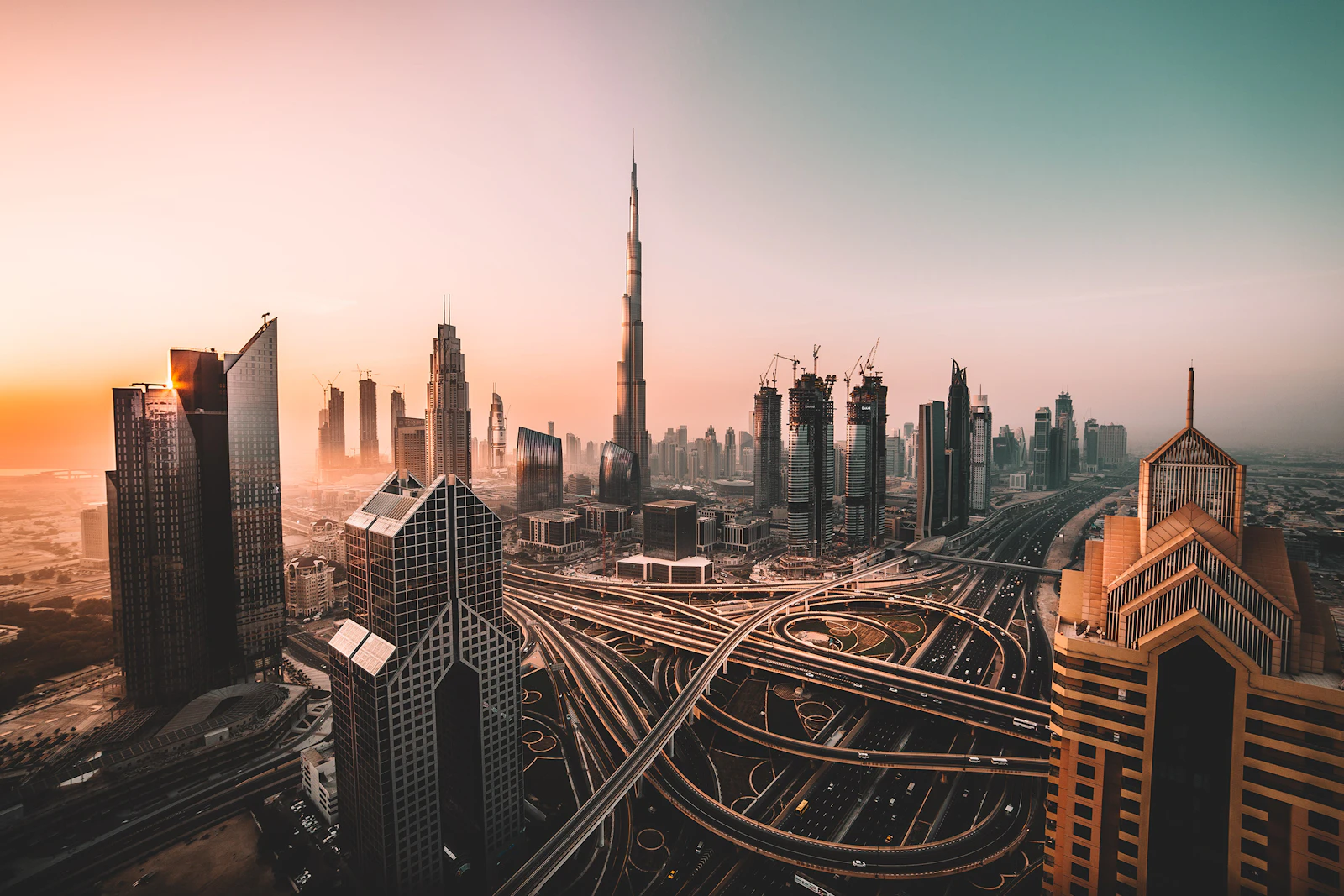
Six days, one Emirates round trip from Bengaluru, and a city that runs entirely on ambition and air conditioning. Dubai in the heat is still Dubai worth doing properly, and six days turned out to be the right amount of time to do it without rushing — enough to hit every major landmark, spend a full day in the desert, cross over to the old city, and still leave one afternoon free for the one thing on the list that had nothing to do with sightseeing at all.
The flight itself is short enough — a little over four hours out of Bengaluru — that Dubai works as a proper long weekend if six days isn’t feasible, but stretching it to six meant nothing had to be skipped for time. Emirates both ways kept things simple: one changeover-free hop each direction, which mattered more than expected given how much of this itinerary depended on timed bookings (sunset slots at the Burj, morning slots at the Museum of the Future) that a delayed connection could easily have wrecked.
Getting there and booking
Almost every paid activity on this trip — Burj Khalifa tickets, the Dubai Frame, the desert safari, skydiving — was booked in advance through a mix of Get Your Guide and Headout rather than at the venue. That turned out to matter more in July heat than it would in cooler months: walk-up queues for the Burj Khalifa alone can run well past an hour in the middle of the day, and the desert safari operators sell out their afternoon slots first since that’s when the temperature actually drops enough to be outdoors comfortably. Booking two to three weeks out gave a choice of time slots; booking a la carte in Dubai itself would have meant fitting the trip around whatever was left.
Day-by-day
Day 1 — Arrival + Downtown. The Emirates flight out of Bengaluru lands mid-afternoon, which leaves enough daylight to actually use the first evening instead of writing it off to jet lag. Checked into Trillionaire Residences by Binghatti in Downtown Dubai — our base for all six nights, and close enough to Dubai Mall that everything else on this itinerary was a short walk or a quick cab away. Spent the evening wandering the Mall itself, ending up outside at the fountain right as the Burj Khalifa lit up for the night — the kind of first-night moment that sets the tone for the whole trip.
Day 2 — Burj Khalifa + Dubai Frame. Booked both through Headout well in advance, which meant walking straight past the ticket counters both mornings. Went up the Burj Khalifa in the early evening, timed for the sunset-into-skyline transition from the 124th floor observation deck — the city goes from hazy gold to a grid of lights in about twenty minutes flat. The next morning was the Dubai Frame: a 150-metre gilded picture frame straddling old and new Dubai, with Zabeel Park’s low-rise skyline on one side of the glass floor and Downtown’s towers on the other. Small compared to the Burj, but it earns the detour.
Day 3 — Museum of the Future + Dubai Aquarium. The Museum of the Future lives up to the hype that its torus-shaped, Arabic-calligraphy-wrapped building promises from the outside — book a timed slot in advance, since walk-up queues can eat a whole morning. The exhibits move from space stations to a genuinely unsettling “Heal” floor built around biotech and consciousness; plan on two to three hours to do it properly. Once the midday heat made anything outdoors unbearable, ducked into the Dubai Aquarium and Underwater Zoo inside Dubai Mall — the walk-through tunnel and the tank’s resident sharks and rays were an easy way to burn the hottest part of the afternoon in air conditioning.
Day 4 — Desert Safari. A Get Your Guide desert safari picked us up from the hotel in the mid-afternoon and drove out to the Dubai desert conservation area for dune bashing in a 4x4 — sharper drops and turns than expected. The stop afterward was all quieter: camel rides at sunset, henna painting, a barbecue dinner laid out in a Bedouin-style camp, and a tanoura dance show once the sky went fully dark. A very different kind of night sky than anything Downtown’s lights allow.
Day 5 — Old Dubai + Skydiving. Spent the morning in Bur Dubai and the Meena Bazaar, weaving through the textile shops and spice stalls that Downtown’s malls don’t really have an equivalent of, then crossed Dubai Creek by abra — the small wooden ferries that cost next to nothing and are still the fastest way between the Bur Dubai and Deira sides. The afternoon was the actual highlight of the trip: skydiving over Palm Jumeirah, with the fifteen-second freefall giving a full view of the palm-shaped island and the coastline before the parachute opened. Nothing else on the itinerary came close to it.
Day 6 — Marina + departure. A slow last morning at Dubai Marina, walking the promenade past the yachts and the cluster of towers along the waterfront, with time for last-minute shopping before heading to the airport for the Emirates flight back to Bengaluru.
Where we stayed
Trillionaire Residences by Binghatti in Downtown Dubai was the base for all six nights, and it shaped the whole trip more than a hotel choice usually does. Being able to walk to Dubai Mall and have the Burj Khalifa visible from the building meant the first and last evenings didn’t need any planning at all — just stepping outside was enough. It also meant every day that started or ended in Downtown (Days 1, 2, and 3 especially) had close to zero commute time, which freed up hours that would otherwise have gone to traffic getting in and out of the area.
What it actually costs
This was a luxury-band trip, not a budget one, and Downtown Dubai pricing reflects that at every level — accommodation, food, and activities all sit well above what the same six days would cost in, say, Bur Dubai or Deira. Between the residence, the paid activities (Burj Khalifa, Dubai Frame, Museum of the Future, desert safari, and skydiving being the five biggest line items), and eating mostly in and around Downtown and the Marina, this is not a trip to attempt on a shoestring. Desert safari and skydiving in particular are worth budgeting for properly rather than trying to find a discount version — the cheaper safari operators cut the sunset timing and the cheaper skydiving slots tend to be over less scenic parts of the coastline than Palm Jumeirah.
Getting around: Careem, Uber, and the Nol card
Dubai runs on Careem and Uber more than it runs on street hails, and both worked exactly as expected across all six days — GPS-accurate pickups, metered fares matching the in-app quote to the dirham, and drivers who took the shortest route on Sheikh Zayed Road without needing to be told. Careem is the local favourite (it started in Dubai and is now owned by Uber, but still runs as its own app with its own driver base), and in practice the two are close to interchangeable: whichever app quoted the shorter wait got used. Both are noticeably safer and more consistent than the equivalent apps in most other countries we’ve used them in — cars are newer, air conditioning is non-negotiable even for a five-minute ride, and every trip is logged and traceable, which matters more than it sounds like it should when travelling with family in 45°C heat. Fares are also transparent in a way that street taxis elsewhere often aren’t: no haggling, no meter disputes, no “tourist rate.”
For the stretches that didn’t need a private cab, Dubai’s Nol card covered the rest. It’s a single rechargeable card for the Metro, buses, and the Dubai Tram, sold at any Metro station kiosk for a small deposit and topped up in cash or by card. The Red Line Metro run from Downtown out toward the Marina turned out to be faster than a cab during evening traffic on more than one occasion, air-conditioned end to end, and cheap enough that the whole six-day Nol balance came to less than a single Careem ride from the airport. The abras across Dubai Creek on Day 5 don’t take Nol — those are a flat cash fare of a dirham or so, paid straight to the boatman — but everything else, Metro, bus, and tram, sits on the one card. Worth picking up on Day 1 regardless of how much of the trip leans on cabs, since it removes any need to carry small change for the rest of the week.
Traffic, rules, and why the city feels this orderly
What stood out more than any single landmark was how disciplined the traffic actually is. Lanes are respected, speed cameras are frequent and clearly signed rather than hidden, and every major junction runs on a system that assumes compliance rather than policing it after the fact — the kind of order that’s easy to stop noticing after a day or two, right up until landing back somewhere that doesn’t have it. Sheikh Zayed Road carries an enormous volume of traffic at speed and still felt calmer than a much smaller road elsewhere, mostly because lane discipline, indicator use, and right-of-way at merges are treated as fixed rules rather than suggestions. Fines for lane violations, using a phone while driving, or not wearing a seatbelt are steep and enforced through an extensive camera network rather than relying on traffic police standing at every junction, which seems to be most of why the discipline holds even late at night with almost no one else on the road to see it.
How the UAE stands apart in the region
Dubai’s polish is easy to attribute to money alone, but the more relevant thing after a week there is how much of it comes from consistency rather than just wealth. The UAE runs Dubai, Abu Dhabi, and the other five emirates under one federal framework, but Dubai in particular has built its identity around being frictionless for outsiders — English on every sign alongside Arabic, tap-to-pay accepted everywhere down to the abra crossing, visas on arrival for a long list of nationalities, and an economy deliberately diversified away from oil and into tourism, logistics, aviation, and finance well before most of its neighbours started that shift. It shows in small ways: the metro announces stops in English and Arabic both, government service centres have digital queue systems that actually work, and the emergency number gets answered instantly. None of that happens by accident — it’s the product of a government that treats visible, working infrastructure as core to the city’s economic pitch, not a side effect of oil wealth.
How clean the emirate actually is
Dubai is aggressively, almost unnervingly clean. Streets, metro stations, malls, and even the desert safari camp were spotless in a way that’s hard to reconcile with the sheer number of tourists moving through the city at any given time. Some of that is sheer maintenance spend — street cleaning and waste collection happen around the clock and it shows — but a meaningful part of it is also fines: littering, spitting in public, and similar infractions carry real financial penalties, and that combination of visible enforcement and constant upkeep changes how people behave in public spaces almost immediately. It’s most obvious in contrast right after crossing Dubai Creek into the older, denser parts of Bur Dubai and Deira on Day 5 — busier, more lived-in, but still nowhere near as littered as equivalently dense old-city districts tend to be elsewhere.
Where Dubai’s challenges are, and where it’s heading
None of this comes without real strain. The pace of construction is relentless — cranes were visible from almost every rooftop view across the six days — and that growth puts pressure on water and electricity demand in a desert climate that has to import or desalinate almost everything it consumes. Heat itself is a growing operational problem, not just a tourist inconvenience: summers are pushing further past what’s comfortable for outdoor labour, which is why so much of the economy (malls, metro, indoor attractions like the Museum of the Future and the Aquarium) is built around moving daily life indoors for months at a time. The cost of living for residents, as opposed to tourists, has also risen sharply as the city has become a global finance and remote-work hub, pricing out some of the workforce that keeps it running. Dubai’s own answer to most of this has been to keep diversifying — deeper investment in renewable energy targets, expanding public transit (the Metro’s Blue Line extension is under construction for the 2029–2030 window), and continuing to position itself as a logistics and aviation hub between Europe, Asia, and Africa rather than leaning on any single industry. Whether the infrastructure keeps pace with the growth is the open question; on the ground in 2026, it still felt ahead of it rather than behind.
Flying Emirates Economy
Both legs were flown in Economy, and the gap between Emirates and most other airlines on a sub-five-hour route was obvious from boarding. Seat-back entertainment (ICE) on Emirates covers thousands of hours of film, TV, and music even on the short Bengaluru–Dubai hop, which most carriers reserve for long-haul only. The bigger surprise was the meal service: a full hot meal served in Economy on a flight barely over four hours, at a time when most airlines have long since cut complimentary catering on anything under six hours down to a snack or nothing at all. Emirates has kept full meal service standard across its Economy cabin regardless of sector length, a legacy of Dubai’s own strategy of using onboard service as a point of differentiation on routes that compete directly against cheaper Gulf and regional carriers — the airline treats the meal as part of the fare rather than an upsell, and it’s one of the more noticeable reasons the connecting-free, same-airline round trip felt worth booking over a cheaper option with a layover.
Notes
Weather was hot throughout the trip, which shaped the schedule more than anything else — indoor, air-conditioned stops (the Mall, the Museum of the Future, the Aquarium) were pushed to the middle of the day, and anything outdoors (the desert safari, the Creek crossing, walking Bur Dubai) was scheduled for morning or evening when the heat was actually bearable. Booking almost every activity through Get Your Guide and Headout made skipping lines at the big-ticket sights painless, and is worth doing regardless of season.
Get in touch
Talk to us directly
Doubts about a credit card, a story idea, a partnership — whatever it is, reach us however's easiest for you.
Prefer we come to you? Fill this in — whatever it's about, the team will read it and get back to you personally.